
What is Lead Climbing?

Have you ever looked up at a cliff with climbers on it and wondered how a rope got up there? If there’s no way to hike around to the top, then someone had to lead climb the route.
With lead climbing, the rope runs directly from the belayer to the climber. As the climber goes up the cliff, he or she clips the rope into bolts that are fixed to the wall or removable pieces of trad gear. This differs from top-rope climbing where the rope initially runs up the wall to a top anchor and back down to the climber.
On the “sharp end of the rope,” the lead climber must move above a bolt or piece of protection in order to advance up the route. If he or she falls before clipping the rope into the next bolt or piece, then the fall will be at least twice as long as the distance above the last piece: A climber three feet above the last piece, for example, would fall six feet, plus a little farther due to rope stretch.
Learning to Lead Climb

Step One: Get Properly Trained
Take courses or learn from a reputable guide company or a trustworthy friend. Before leading, you need to be solid in placing trad gear (if you plan to lead a trad climb), clipping quickdraws, belaying a leader, managing the rope and building anchors.
Step Two: Assess Your Mental Readiness
Before attempting to lead, ask yourself if you’re mentally ready for it. Be wary of climbing buddies who say, “just go for it” or “you got this” without honestly considering your experience and technical skills. Lead climbing requires you to clip gear, manage the rope and keep a cool head while climbing above gear, all things that you don’t have to do while top roping.
Lead climbing can be scary and there’s no shame in admitting that. If your head is not ready for it, continue to work on your skills and use every opportunity to follow a lead climber as a learning experience. You can observe gear placements, practice technique and move steadily closer to being ready to give it a try.
Step Three: Do a Mock Lead
A good option for first-time lead climbers is to do a mock lead. With a mock lead, you climb a route on top rope while also leading up with another rope. This allows you to focus on placing gear, clipping bolts and managing the rope on lead with the security of having a top rope as backup to catch you if you fall. To do a mock lead, you need two climbing ropes and two belayers.
Step Four: Start Easy
When you are ready to try your first lead, keep the following in mind:
- Don’t be ashamed to get on a route that’s frequented by totally new climbers.
- Just because you can climb 5.10 on top rope does not mean you can lead climb at that level.
- Learning to lead in a climbing gym can be a good place to start, but know that when you go outdoors you’ll need to be able to build and clean an anchor, which are two things you don’t need to do at the gym.
- Start on a route where you feel completely stable and under control so that you can focus on properly placing gear, clipping bolts and managing the rope.
Gear for Lead Climbing
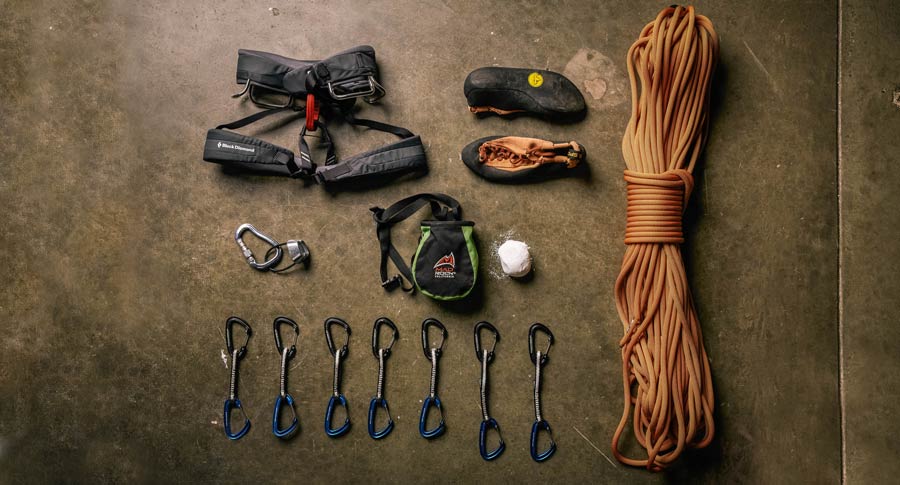
The gear you need for lead climbing builds upon the essentials for top-rope climbing.
In addition to standard items like a rope, harness, shoes and a helmet, the lead climber needs to carry gear specific to either sport leading or trad leading. If you’re lead climbing at the gym, check with a gym employee to find out what gear is provided. Most gyms have fixed quickdraws on the routes and fixed anchors at the top. Some gyms even provide ropes.
Sport leading:
- Quickdraws (quantity depends on the number of bolts on the route)
- Gear for building an anchor
Trad leading:
- An assortment of removable gear (such as nuts and cams)
- Quickdraws (quantity depends on the length of the route)
- Gear for building an anchor
Whether sport climbing or trad climbing, the lead climber must have the gear and knowledge to build and clean an anchor at the top of the climb. The specific climb and type of anchor he or she plans to build will dictate the gear required. This can range from a couple of quickdraws to a cordelette and several locking carabiners.
To learn more, read our articles about how to choose the following types of gear:
- Quickdraws
- Climbing Slings, Cord and Webbing
- Active Climbing Protection (Cams)
- Passive Climbing Protection (Nuts, Stoppers, Chocks)


